
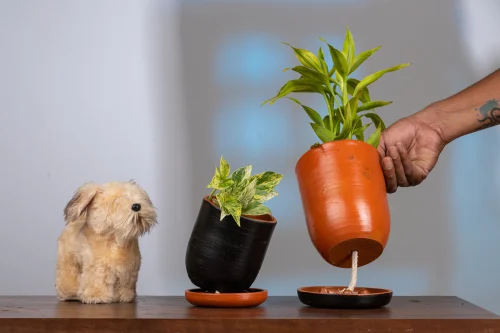
Short answer (featured snippet)
Top watering in self watering planters is temporary. You should stop top watering when:
- the wick is fully activated
- soil stays evenly moist without drying patches
- roots are established and growing
- reservoir water level begins dropping naturally
For most plants, this transition phase lasts about 1–3 weeks, although timing varies depending on plant type, soil mix, and environmental conditions.
Why Top Watering Is Used in the First Place
Many beginners wonder why top watering is recommended if self watering planters are designed for reservoir watering. The reason is simple: the system needs a setup phase.
During initial use, top watering helps:
- settle the soil evenly
- start wick activation
- initiate capillary action
- create the initial moisture gradient.
Without this step, dry soil may resist absorbing water from below. Therefore, top watering acts as a bridge between traditional watering and reservoir-based watering.
Learn more here:
👉 How Long Does It Take for a Self Watering Planter to Start Working
Signs It’s Time to Stop Top Watering
Knowing when to switch to reservoir watering is the key to using a self watering planter correctly. Instead of relying only on time, watch for these practical signals.
Soil stays evenly moist
If the top layer no longer dries rapidly and moisture feels consistent throughout the pot, capillary action is working properly. As a result, the reservoir can handle ongoing hydration.
Reservoir level starts dropping
When water levels decrease naturally, it means the system is actively moving moisture upward. If the reservoir remains full for long periods, wicking may not yet be fully established.
👉 Why Is My Self Watering Planter Always Full?
Roots are established
Healthy growth is another strong indicator. Look for:
- new leaves or shoots
- steady growth patterns
- improved plant stability.
Once roots extend downward toward moisture, top watering becomes less necessary.
Typical Timeline (Realistic Expectations)
The self watering planter transition phase varies depending on plant speed and conditions.
- Fast-growing plants (herbs, pothos): about 1 week.
- Medium growers (most houseplants): 2–3 weeks.
- Slow growers or succulents: longer transition periods.
Environmental factors such as humidity, light levels, and soil composition also affect timing. Consequently, observation is more reliable than strict schedules.
Related guide:
👉 Do Self Watering Planters Work for Succulents Indoors?
What Happens If You Keep Top Watering Too Long
Continuing to top water beyond the transition period may create problems. While occasional top watering is useful, constant top watering defeats the design of the system.
Common issues include:
- Reduced root oxygen due to soil saturation
- Fungus gnat attraction from overly moist surface soil
- Salt buildup without proper flushing cycles
- Increased risk of root rot.
Additionally, overwatering may create unpleasant smells or mold growth.
Helpful troubleshooting:
👉 Do Self Watering Planters Attract Fungus Gnats?
When You SHOULD Continue Top Watering Longer
Although most plants transition quickly, certain situations require extended top watering.
After repotting
Fresh soil needs time to settle and distribute moisture evenly. During this phase, gentle top watering helps maintain consistent hydration.
👉 How to Repot a Plant Into a Self Watering Planter
Seedlings or young plants
Early-stage roots may not reach the moisture gradient yet. Therefore, top watering supports development until roots grow deeper.
When to Temporarily Return to Top Watering
Even after switching fully to reservoir watering, occasional top watering remains useful.
Flushing salts
Mineral buildup from fertilizer or tap water can accumulate over time. A periodic top watering flush removes excess residues.
Troubleshooting yellow leaves or uneven moisture
If symptoms appear, a controlled top watering can rebalance soil moisture quickly.
Beginner Mistakes During Transition
Understanding top watering vs reservoir watering timing helps avoid common errors.
Stopping too early
If wick activation isn’t complete, soil may dry unevenly and plants may wilt.
Never stopping
Continuing heavy top watering eliminates the benefits of capillary action and increases overwatering risk.
Keeping reservoir constantly full
Overfilling prevents proper oxygen exchange and disrupts the moisture gradient.
Simple Transition Method (Step-by-Step)
Use this practical method when transitioning to self watering planter reservoir watering:
- Top water lightly during initial setup.
- Fill reservoir partially rather than fully.
- Monitor soil for even moisture distribution.
- Observe reservoir level for natural drop.
- Gradually reduce top watering frequency.
- Stop top watering once balance stabilizes.
This gradual approach prevents sudden dryness while encouraging the system to function correctly.
FAQ
How long should you top water?
Typically 1–3 weeks, depending on plant type and environmental conditions. Faster-growing plants establish wicking sooner.
Should you ever top water again?
Yes — occasionally. Top watering helps flush salts, reset moisture balance, or address temporary issues.
Can top watering damage a self watering planter?
Not by itself. Problems occur only if top watering replaces reservoir watering entirely or leads to constant soil saturation.
What if plant wilts after stopping?
Wilting may indicate incomplete wick activation or uneven moisture. Try a light top watering and check that the reservoir contains enough water.
Learning when to stop top watering self watering planters ensures a smooth transition into reservoir watering. Once wick activation and root establishment occur, capillary action maintains moisture automatically, making plant care simpler and more predictable.