
Short answer (featured snippet)
Both methods can be used in self watering planters — however, they serve different purposes.
- Bottom watering (reservoir watering) is the main system designed for daily plant care.
- Top watering is helpful for:
- starting wick activation
- restarting capillary action if soil dries
- flushing salts from soil
- correcting uneven moisture.
In most cases, the best watering method for a self watering planter is using the reservoir as the primary water source while occasionally top watering when needed.
How Self Watering Planters Are Designed to Water Plants
Self watering planters are primarily designed around bottom watering. Instead of pouring water directly onto soil every time, water sits in a reservoir below the soil chamber.
Through capillary action, moisture moves upward into the soil gradually. Because of this slow movement, the system maintains a stable moisture gradient:
- lower soil remains slightly moist
- upper layers stay aerated
- roots receive both water and root oxygen.
As a result, the planter reduces watering guesswork and helps prevent overwatering.
If you want a deeper explanation of the mechanism:
Bottom Watering (Reservoir Method): How It Works
Bottom watering vs self watering systems is often misunderstood. In reality, self watering planters are a specialized form of bottom watering with controlled moisture delivery.
Benefits of reservoir watering
- Consistent moisture levels
- Reduced risk of overwatering
- Less frequent watering
- Better evaporation balance.
Water rises slowly through wick contact and soil structure. Therefore, plants receive hydration based on demand rather than sudden soaking.
When to use bottom watering
- Regular plant maintenance
- Established plants with active roots
- Stable indoor environments.
For everyday use, reservoir refill is usually all you need.
Top Watering: When It’s Actually Necessary
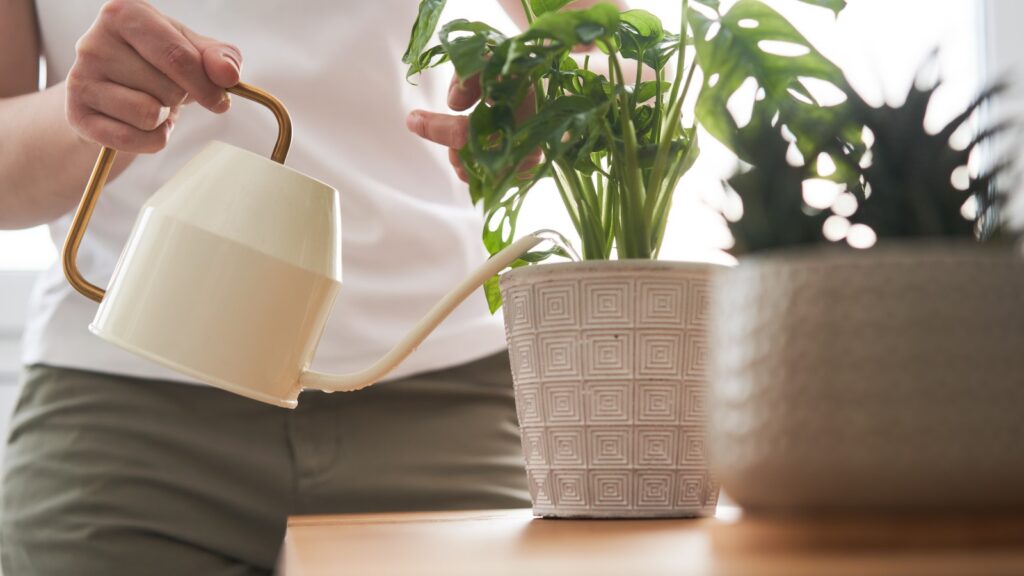
Many beginners ask: can you top water self watering planters? Yes — and sometimes you should.
Although reservoir watering is the primary method, top watering plays an important supporting role.
1. Initial setup / wick activation
At the beginning, soil must become evenly moist so capillary action can start properly. Top watering helps activate the wick and ensures moisture reaches the lower soil layers.
See:
👉 How Long Does It Take for a Self Watering Planter to Start Working?
2. Restarting capillary action
If soil dries completely, moisture movement stops. Adding water from the top restores wick contact and restarts the system.
3. Flushing salts
Mineral buildup from fertilizers or tap water may accumulate over time. Occasionally top watering allows excess salts to wash through the soil.
4. When plants show stress
If plants wilt or soil becomes unevenly dry, top watering provides immediate relief while the reservoir rebalances moisture.
Top Watering vs Bottom Watering (Comparison Table)
| Method | Pros | Cons | Best For |
|---|---|---|---|
| Bottom watering (reservoir) | Consistent moisture, less guesswork, stable moisture gradient | Slower initial hydration | Daily maintenance |
| Top watering | Fast hydration, flushing salts, wick activation | Risk of overwatering if overused | Setup, troubleshooting, periodic flushing |
Both approaches complement each other. Therefore, combining them strategically produces the best results.
Common Mistakes Beginners Make
Understanding top watering vs bottom watering self watering planter methods helps avoid frequent errors.
Never top watering
Some users believe top watering is harmful and avoid it completely. However, without occasional flushing or wick activation, performance may decline.
Always top watering
On the other hand, treating a self watering planter like a regular pot defeats its design. Excessive top watering may reduce oxygen levels and disrupt capillary balance.
Overfilling the reservoir
Filling above the overflow hole increases overwatering risk and reduces root oxygen.
For more beginner guidance:
Does Plant Type Change the Method?
Yes — plant type influences watering strategy.
Tropical plants
- prefer consistent moisture
- reservoir watering works well.
Herbs and vegetables
- benefit from stable hydration
- occasional top watering helps flush nutrients.
Succulents
- require careful monitoring
- avoid keeping reservoirs constantly full.
Seasonal Differences (Winter vs Summer)
Seasonal changes affect watering behavior.
Summer
- higher evaporation
- faster water use
- reservoirs may need more frequent refills.
Winter
- slower growth
- reduced moisture demand
- reservoir levels should stay lower to prevent excess moisture.
Best Routine (Practical Recommendation)
For most situations, follow this balanced routine:
- Use reservoir watering as the main system.
- Top water during initial setup.
- Occasionally top water to flush salts.
- Top water if soil becomes dry or wicking slows.
- Monitor plant signals and adjust watering method accordingly.
This combined watering method self watering planter strategy maintains healthy moisture levels without risking overwatering.
FAQ
Should you top water every refill?
No. Most refills should go directly into the reservoir. Top watering is only needed occasionally.
Is top watering bad for self watering planters?
Not at all. It becomes problematic only if done excessively or without considering soil moisture.
Can bottom watering alone be enough?
Yes, for established plants in stable conditions. However, periodic top watering improves long-term soil health.
How often should you flush from top?
Typically every few weeks or when mineral buildup becomes noticeable, depending on water quality and fertilizer use.
Using both top watering and bottom watering correctly allows self watering planters to work as intended. Once you understand how capillary action, moisture gradient, and root oxygen interact, maintaining healthy plants becomes significantly easier.