
It can be frustrating when your plants are perfectly watered but still not growing. The truth is, plants in self watering pots still grow slowly without proper light because water alone is not enough to support healthy development.
Self watering planters solve one major problem—consistent moisture—but plant growth depends heavily on light. Without sufficient light, plants simply don’t have the energy to grow, no matter how ideal the watering system is.
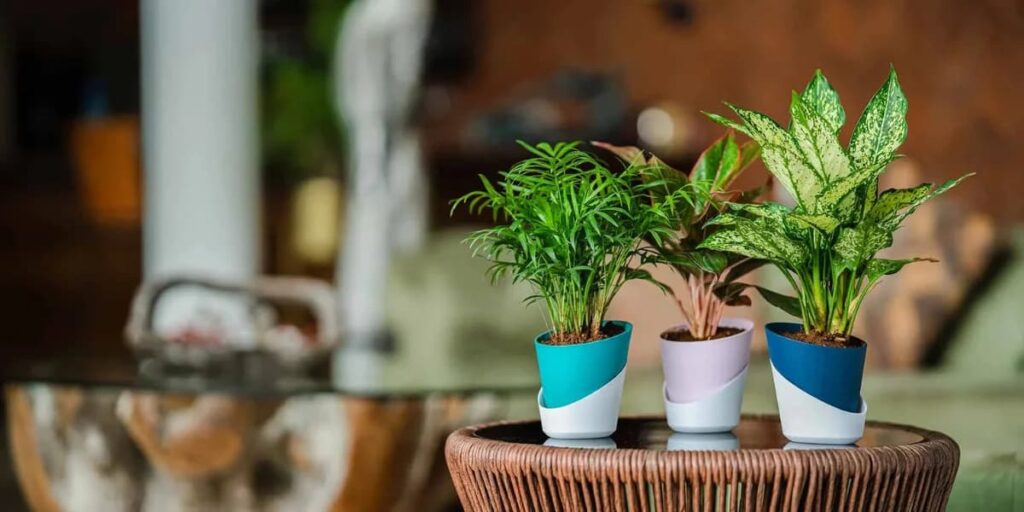
Water Isn’t the Limiting Factor—Light Is
Many indoor gardeners assume watering is the main challenge. While that’s often true in traditional pots, self watering systems remove that variable.
But growth depends on photosynthesis, which requires light. When light is limited:
- Plants produce less energy
- Growth slows or stops
- Nutrient uptake becomes less efficient
This is why plants grow slowly in self watering pots without proper light, even when everything else seems correct.
How Low Light Affects Plant Growth
When plants don’t receive enough light, they enter a kind of survival mode.
Reduced leaf production
Plants grow fewer and smaller leaves to conserve energy.
Leggy growth
Stems stretch toward light sources, becoming thin and weak.
Faded color
Leaves may turn pale green or yellow.
Slower root development
Even roots grow more slowly when the plant lacks energy.
Self watering planters keep roots hydrated, but they can’t compensate for low light conditions.
Why Self Watering Pots Can Make the Problem More Noticeable
Interestingly, self watering systems can make slow growth more obvious.
Because moisture is consistent:
- Plants are not stressed by drought
- Growth limitations become more clearly tied to light
- Leaves may stay hydrated but still underdeveloped
This often leads people to wonder why their plant looks “healthy but not growing.”
Signs Your Plant Needs More Light
If your plant is in a self watering pot and still struggling, look for these signs:
- Long gaps between leaves (leggy stems)
- Small or undersized new growth
- Leaves leaning toward a window
- Little to no growth over weeks
These are clear indicators that lighting—not watering—is the issue.
How to Fix Slow Growth in Self Watering Planters
Improving light conditions is usually the solution.
Move plants closer to a window
South- or east-facing windows typically provide the best indoor light.
Add grow lights
Artificial lighting can provide consistent, reliable light year-round.
Adjust light duration
Most plants need 8–12 hours of light daily.
Rotate plants regularly
This ensures even light exposure and balanced growth.
Once lighting improves, plants can fully benefit from the steady moisture provided by the planter.
Balancing Light and Water
Healthy plant growth depends on balance.
With strong light:
- Plants grow faster
- Water usage increases
- Nutrient demand rises
With low light:
- Growth slows
- Water usage decreases
- Soil stays moist longer
Understanding this relationship helps you adjust both lighting and watering for better results.
Final Thoughts
If your plants grow slowly in self watering pots without proper light, the issue isn’t your planter—it’s your lighting conditions. Self watering systems provide consistent hydration, but without enough light, plants simply can’t grow efficiently.
By improving light exposure—either naturally or with grow lights—you can unlock the full benefits of your setup and encourage stronger, faster plant growth.
FAQ
Can plants survive in self watering pots without good light?
Yes, but they will grow slowly and may become weak over time.
Do self watering planters improve growth?
They help with consistent watering, but light is still the main factor for growth.
How much light do indoor plants need?
Most require 8–12 hours of light daily, depending on the plant type.