
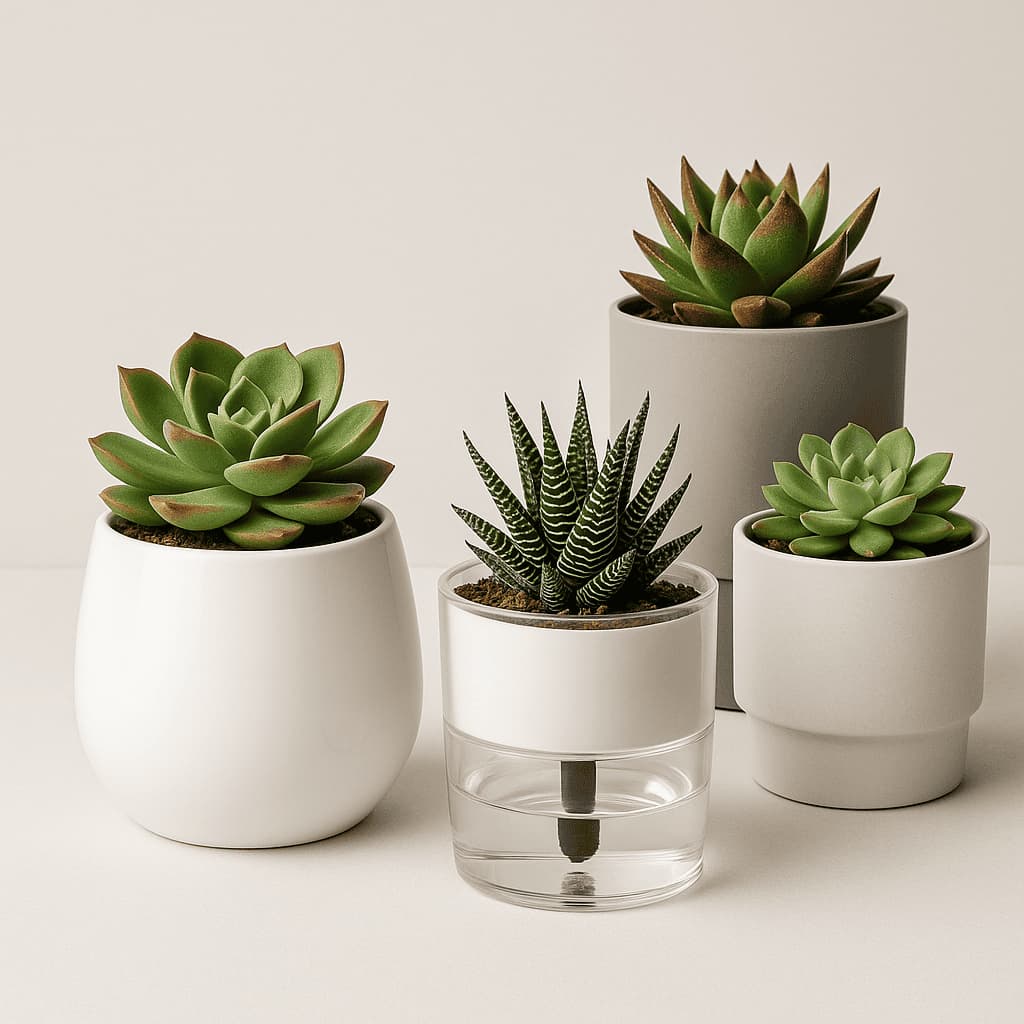
Self watering planters promise convenience, consistent moisture, and less guesswork. Succulents, on the other hand, are famous for thriving on neglect and dry soil.
So it’s no surprise that people ask: do self watering planters work for succulents indoors?
The idea feels risky. Constant moisture sounds like a recipe for rot. And many growers have lost plants trying.
The truth is more nuanced.
Self watering planters are not ideal for most succulents — but they aren’t an automatic death sentence either. With the right soil, limited reservoir use, and realistic expectations, some succulents can grow in self watering planters indoors.
This guide gives you a calm, honest answer:
- why succulents and self watering pots seem incompatible
- when they actually work
- the real risks
- a safe way to use them
- which succulents tolerate them best
- and how to avoid the mistakes that kill plants
Why Succulents and Self Watering Planters Seem Incompatible
Succulents evolved in dry, harsh environments. Their entire survival strategy depends on one thing: water storage.
They store moisture in thick leaves, stems, or roots and expect long dry periods between rains.
Self watering planters do the opposite.
They keep a reservoir of water beneath the soil and wick moisture upward continuously. That design is perfect for moisture-loving plants like herbs or ferns. For succulents, it can feel like living in a swamp.
Here’s where the conflict comes from:
- Succulents need dry cycles.
Their roots are adapted to dry soil that re-wets occasionally, not constant dampness. - Self watering planters provide ongoing moisture.
Even when the top looks dry, the lower root zone may stay wet for days or weeks. - Wet roots lead to rot.
Succulent roots suffocate easily in soggy soil, allowing bacteria and fungi to attack.
That’s why many people assume the answer to are self watering planters good for succulents is simply “no.”
But that’s not the full story.
Do Self Watering Planters Actually Work for Succulents?
Yes — but only under specific conditions.
Self watering planters can work for succulents indoors if:
- the soil drains extremely fast
- the reservoir is not kept full
- the plant is allowed to dry completely
- only tolerant succulent species are used
- the grower actively monitors moisture
They don’t work when:
- standard potting soil is used
- the reservoir stays full all the time
- the plant never experiences a dry cycle
- sensitive species like echeveria or lithops are used
Why do most people run into problems?
Because self watering planters are designed to prevent drying out, while succulents depend on drying out to stay healthy.
So when people ask:
- can succulents grow in self watering planters?
- do self watering pots work for succulents?
The honest answer is:
They can — but only when you deliberately break the “always moist” design of the planter.
Risks of Using Self Watering Planters for Succulents
Root Rot
This is the biggest danger.
Succulent roots need oxygen. Constant moisture fills air pockets in the soil and suffocates them. Once roots die, rot spreads into the stem and leaves.
Rot usually starts invisibly, so by the time you notice soft leaves, it’s often too late.
Overwatering and Constant Moisture
Even if you don’t refill the reservoir often, self watering planters can keep the bottom half of the pot wet far longer than you realize.
That’s why people struggle with overwatering succulents in a self watering planter even when they think they’re being cautious.
Mold and Algae Growth
Constant moisture encourages mold on the soil surface and algae in the reservoir.
Besides looking bad, this can affect oxygen levels in the soil and increase disease risk.
(See: How to Prevent Mold in Self Watering Planters Indoors)
Salt Buildup in the Reservoir
Minerals from tap water accumulate in the reservoir and wick upward into the soil.
Over time, this causes leaf burn, weak growth, and poor root health.
(See: Can You Overwater Plants in a Self Watering Planter?)
How to Use a Self Watering Planter Safely for Succulents
This is the most important part.
If you want to try succulents in self watering pots, this setup minimizes risk.
Use a Gritty, Fast-Draining Soil Mix
Regular potting soil is deadly here.
You need a mix that dries fast even with bottom moisture:
- 50–70% inorganic material
(pumice, perlite, coarse sand, lava rock) - 30–50% cactus soil or coconut coir
This prevents water from lingering around roots.
(See: Best Soil for Self Watering Planters)
Keep the Reservoir Empty Most of the Time
This breaks the core design of the planter — on purpose.
Treat the reservoir as an occasional watering tool, not a permanent water source.
Let the Soil Dry Completely
Before adding any water to the reservoir:
- lift the pot to feel weight
- check moisture deep in the soil
- confirm the soil is fully dry
Succulents still need real dry cycles.
Fill the Reservoir Only Occasionally
Instead of keeping it full:
- fill it lightly
- let it empty
- wait until the soil dries again
This mimics normal watering while reducing surface wetting.
Use Small Reservoirs
Large reservoirs keep soil wet too long.
Small reservoirs empty faster and reduce the danger zone.
Monitor Root Health
Check roots every few months:
- white and firm = healthy
- brown and mushy = rot starting
Early detection can save the plant.
Which Succulents Are More Likely to Work in Self Watering Planters
These tolerate moisture better than most succulents.
Haworthia
- slow growing
- shallow roots
- prefers light shade
- handles slightly more moisture
Gasteria
- similar to haworthia
- forgiving of inconsistent watering
- tolerates indoor conditions well
Aloe
- deeper roots
- drinks more than most succulents
- works in larger, fast-draining setups
Snake Plant (borderline)
- technically not a true succulent
- extremely tolerant
- handles self watering planters better than most
These are your safest options if you want to experiment.
Which Succulents Should Avoid Self Watering Planters
These almost always fail.
Echeveria
- very sensitive to wet roots
- rots easily
- prefers dry air and soil
Lithops
- extremely strict dry cycles
- hates constant moisture
- almost guaranteed to rot
Cactus
- evolved for extreme drought
- shallow roots
- hates bottom moisture
Crassula
- rots easily
- prefers full dry-out
- sensitive to soggy soil
If you love these plants, stick to regular pots.
Self Watering Planters vs Regular Pots for Succulents
Moisture Control
- Regular pots: full control
- Self watering: moisture sneaks in from below
Risk
- Regular pots: low if soil is right
- Self watering: moderate to high
Convenience
- Regular pots: manual watering
- Self watering: fewer waterings
Safety
- Regular pots: safer for most succulents
- Self watering: only safe with strict setup
For most growers, regular pots remain the better choice.
(See: Self Watering Planters vs Regular Pots (for Indoor Plants))
Common Mistakes With Succulents in Self Watering Planters
These kill plants fast.
- Keeping the reservoir full all the time
- Using regular potting soil
- Never letting soil dry completely
- Not cleaning the reservoir
- Choosing sensitive species
- Ignoring early rot signs
(See: Common Mistakes with Self Watering Planters)
FAQ
Are self watering planters good for succulents?
Not really. They can work with strict setup and tolerant species, but regular pots are safer.
Can succulents survive constant moisture?
No. Constant moisture suffocates roots and causes rot.
Should you keep the reservoir full for succulents?
No. Keep it empty most of the time and use it only occasionally.
What happens if a succulent gets overwatered?
Roots rot, leaves soften, growth stops, and the plant often dies.
Do all succulents hate self watering planters?
No. Some like haworthia and gasteria tolerate them better.
Final Takeaway
So — do self watering planters work for succulents indoors?
Yes, but only if you intentionally undo the planter’s core design.
Most succulents still prefer:
- gritty soil
- deep dry cycles
- manual watering
- regular pots
Self watering planters are a niche option — not a default solution.
If you want the safest, healthiest succulents indoors, regular pots still win.
If you want to experiment, use tolerant species, fast-draining soil, and an almost-empty reservoir.
That balance removes the fear of overwatering — and keeps your succulents alive.