
Featured Snippet / Short Answer
Do self watering planters need drainage holes?
No — self watering planters do NOT need traditional drainage holes.
But they DO need an overflow hole.
A self watering planter works by holding water in a reservoir. Traditional drainage holes would break this system.
However, without an overflow hole, excess water has nowhere to go, which can lead to root rot, bad smells, and dying plants.
Introduction
If you’ve ever picked up a self watering planter and thought “Wait… there’s no hole in the bottom — is this safe?” — you’re not alone.
This is one of the most common points of confusion for beginners and even experienced plant owners. We’re taught early on that every pot needs drainage holes, so when a self watering planter looks sealed, it feels wrong.
The truth is:
self watering planters work differently from regular pots, and judging them by the same rules causes a lot of unnecessary stress — and plant problems.
Let’s clear this up once and for all.
Drainage Holes vs Overflow Holes (Key Difference)
This distinction is the heart of the confusion.
Drainage hole (regular planter)
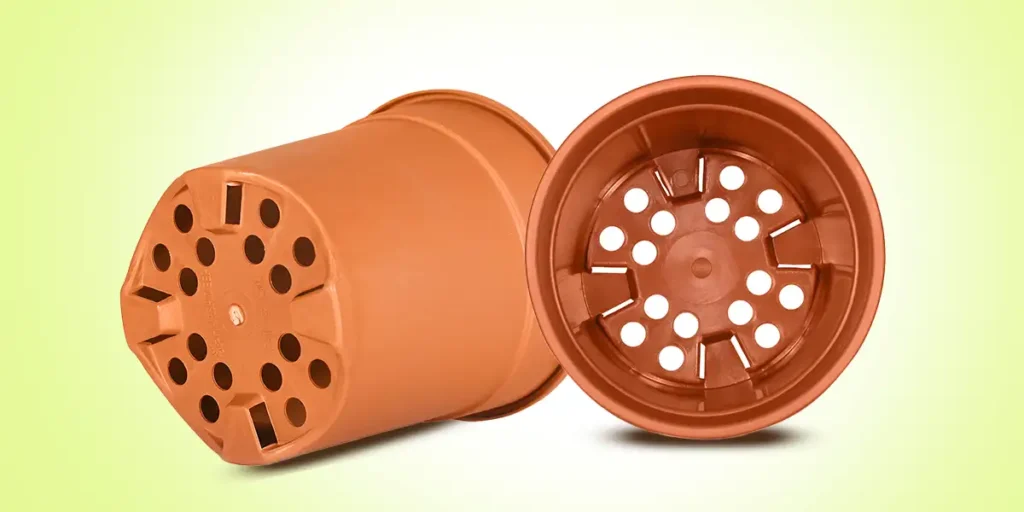
A drainage hole is what you see in traditional pots:
- located at the bottom
- lets water flow out immediately
- prevents soil from staying wet
- relies on gravity, not control
Its job is simple: dump excess water right away.
Overflow hole (self watering planter)
An overflow hole works very differently:
- usually placed on the side, slightly above the base
- does NOT drain soil
- only releases water when the reservoir is full
- controls the maximum water level
Instead of draining constantly, it prevents flooding.
👉 This is why drainage holes in self watering planters are not the same thing as overflow holes — even though people often use the terms interchangeably.
Do Self Watering Planters Need Drainage Holes?
Let’s answer this directly.
❌ Traditional drainage holes — NOT needed
A self watering planter is designed to:
- store water in a reservoir
- feed moisture upward through capillary action
- keep roots from sitting in runoff water
If water drained freely from the bottom, the reservoir wouldn’t exist.
That’s why do self watering pots need drainage?
👉 No, not in the traditional sense.
✅ Overflow hole — absolutely required
What is required is a self watering planter overflow hole.
Its job:
- prevents excess water buildup
- protects roots from constant submersion
- allows you to safely refill without guessing
Without it, excess water in a self watering planter has nowhere to escape.
What Happens If There Is NO Overflow Hole?
This is where problems start.
A self watering planter without drainage hole AND without overflow is dangerous.
Here’s what can happen:
🌊 Constant flooding
Water keeps accumulating in the reservoir with no limit.
🫁 Roots lose oxygen
Roots need air. Submerged roots enter an anaerobic environment.
👃 Bad smells
Stagnant water + dying roots = sulfur-like odors.
(If this sounds familiar, see Why Do Self Watering Planters Smell Bad?)
🍂 Yellow leaves
Plants often show stress through yellowing foliage.
(Related: Why Are Leaves Turning Yellow in a Self Watering Planter?)
☠️ Root rot
This is the final stage — and often fatal.
So if you’re asking what happens if a self watering planter has no drainage, the answer is:
👉 it slowly drowns your plant.
Can a Self Watering Planter Have Both?
Yes — and this is where things get confusing visually.
Some designs include:
- a decorative bottom hole (not functional)
- an inner pot with holes
- an outer pot acting as a reservoir
- a visible side overflow hole
In these cases:
- the inner pot may have holes
- the outer pot usually does NOT
- the overflow controls the system
Sometimes people see a hole and assume it’s drainage — but it’s actually overflow.
And sometimes a hole exists only for manufacturing or aesthetics, doing nothing for drainage at all.
How to Check If Your Self Watering Planter Is Safe
Use this quick checklist:
✅ 1. Look for an overflow hole
Usually:
- on the side
- 1–3 cm above the base
- small but visible
✅ 2. Check that it’s not blocked
Soil, roots, or mineral buildup can clog it.
✅ 3. Pour-test
Add water slowly:
- once water reaches the overflow hole, it should exit
- if not — that’s a problem
✅ 4. Inner pot clearance
Roots should not sit directly in water unless the plant is semi-aquatic.
If you fail any of these checks, you’re dealing with a risky setup.
Common Problems Related to Drainage Confusion
Many plant issues blamed on “bad soil” or “wrong light” are actually water control problems.
Common symptoms include:
- overwatering despite careful refills
- wilting even though soil is wet
- persistent bad smell
- mold on soil surface
If your plant looks thirsty but the soil is damp, check out
Why Is My Plant Still Wilting in a Self Watering Planter?
Indoor vs Outdoor Use
Outdoors, overflow holes become even more important.
Why?
- rain adds uncontrolled water
- storms can fill reservoirs quickly
- evaporation is unpredictable
A self watering planter used outside must have a working overflow hole.
Otherwise:
- one heavy rain = flooded roots
- damage can happen in a single day
More on this here:
Can You Leave a Self Watering Planter Outside?
FAQ
Do self watering planters need drainage holes at the bottom?
No. Do self watering planters need bottom drainage?
They do not need traditional bottom drainage holes.
They need an overflow hole to control water level.
What if my self watering planter has no holes at all?
That’s risky. Without any outlet:
- water accumulates endlessly
- roots stay submerged
- rot is likely
If possible, add an overflow hole or stop using it as a self watering system.
Is an overflow hole the same as a drainage hole?
No.
Difference between drainage holes and overflow holes:
- drainage = removes water immediately
- overflow = limits water height
They serve completely different purposes.
Can I drill a hole myself?
Yes — carefully.
Tips:
- drill on the side, not the bottom
- place hole slightly above reservoir base
- smooth edges to prevent cracking
This converts a dangerous planter into a safe one.
Final Takeaway
Let’s simplify everything:
- Drainage ≠ overflow
- No drainage hole is normal
- No overflow hole is NOT
- Self watering planters are safe only when excess water has an exit
If your planter smells, yellows leaves, or keeps wilting —
the issue is often water control, not the plant itself.
Once you understand this difference, self watering planters stop being confusing — and start being incredibly effective. 🌱