
Introduction
Self watering planters often look like the simplest option for growing plants.
You add soil, plant something, fill the reservoir — and expect the system to take care of the rest.
When problems appear, many people assume they made a serious mistake.
In reality, most issues with self watering planters are not caused by the planters themselves.
They usually come from expectations.
These systems work differently from traditional pots.
And when they don’t behave the way we imagine they should, it’s easy to feel unsure or disappointed.
This article is not about blaming mistakes.
It’s about understanding why they happen — and why they’re so common.
Why Mistakes Are Common with Self Watering Planters
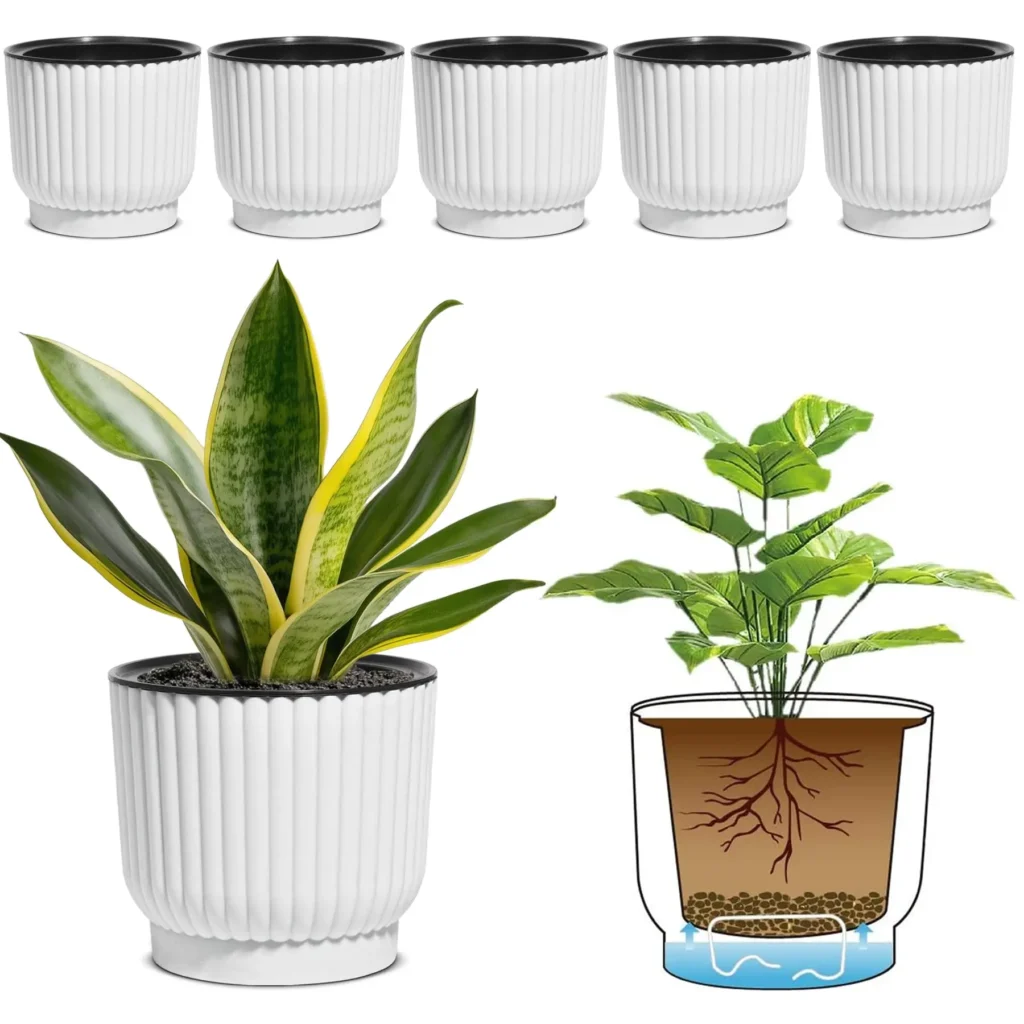
Self watering planters change the way water reaches the plant.
Instead of watering from the top, moisture moves upward from a reservoir below.
This creates a few challenges for beginners:
- The surface of the soil may stay dry
- The reservoir hides what’s happening below
- There’s less visual feedback compared to regular pots
On top of that, the name “self watering” can be misleading.
It sounds fully automatic, even though the system still depends on conditions like soil, light, and temperature.
Because of this, many mistakes are not a lack of skill.
They are part of learning how a different system behaves.
Most Common Mistakes with Self Watering Planters
Using the Wrong Soil Mix
What happens
The soil stays wet for too long, or water doesn’t move evenly.
Why
Many standard potting soils are designed for top watering.
They can become compacted or hold too much moisture when used with a reservoir.
What to understand
Self watering systems rely on balance.
Soil structure matters more than it might seem at first.
Keeping the Reservoir Constantly Full
What happens
Plants may look stressed, sluggish, or overly soft.
Why
A full reservoir all the time reduces natural drying cycles.
Roots can struggle without enough air.
What to understand
These planters still benefit from small fluctuations.
Constant saturation is not the same as consistent moisture.
Choosing a Planter That’s Too Large
What happens
The plant grows slowly, or the soil feels inactive.
Why
Large reservoirs paired with small plants create excess moisture relative to root size.
What to understand
The container should match the plant’s current stage, not its future size.
Expecting Instant Results
What happens
You watch closely, waiting for visible improvement that doesn’t come right away.
Why
Plants need time to adapt their roots to a new watering method.
What to understand
Adjustment periods are normal.
Lack of immediate change doesn’t mean the system isn’t working.
Checking the Soil Too Often
What happens
The surface looks dry, so you assume the plant needs help.
Why
Top layers dry faster than lower layers connected to the reservoir.
What to understand
Visual cues change in self watering setups.
Dry on top doesn’t always mean dry below.
Using Self Watering Planters for Unsuitable Plants
What happens
Some plants struggle no matter how carefully they’re observed.
Why
Not all plants prefer steady moisture near their roots.
What to understand
Compatibility matters more than convenience.
Ignoring Indoor Conditions (Light, Airflow)
What happens
Growth slows or leaves lose color.
Why
Indoor environments often have lower airflow and uneven light, which affects water use.
What to understand
Watering systems don’t replace environmental needs.
How These Mistakes Usually Show Up
Most mistakes don’t appear as sudden failure.
They show up gradually, through small signals:
- Yellowing leaves
- Slower growth than expected
- A heavy or sour smell from the soil
- A general feeling that something feels “off”
These signs are not diagnoses.
They’re simply feedback from the plant and the system working together.
Recognizing patterns is more helpful than reacting to single symptoms.
Why These Mistakes Don’t Mean Failure
This part is important.
Most common issues with self watering planters are reversible.
Plants are often more adaptable than we expect.
Roots can adjust.
Soil conditions can stabilize.
Growth can resume once the environment becomes predictable.
In many cases, observation helps more than action.
Frequent interference can interrupt the plant’s adjustment process.
Learning to pause is often part of success.
Mistakes Specific to Indoor Use
Indoor self watering planters behave differently from outdoor ones.
Some common indoor factors include:
- Slower evaporation
- Limited or indirect light
- Stable temperatures with fewer natural fluctuations
- Effects of heating and air conditioning
These conditions reduce water usage, even if the reservoir is available.
Many indoor issues come from assuming indoor plants drink water at the same pace as outdoor ones.
👉 Related reading: How to Use a Self Watering Planter Indoors
Mistakes When Growing Herbs in Self Watering Planters
Herbs are popular choices, but they bring their own challenges.
Common issues include:
- Mixing herbs with different moisture preferences
- Assuming all herbs like constantly moist soil
- Using very small containers with limited airflow
Herbs may look similar above the soil, but their root behavior can be very different.
👉 Related reading: Best Herbs for Self Watering Planters
👉 Related reading: Are Self Watering Planters Good for Herbs
How to Avoid Overcorrecting
One of the most overlooked mistakes is reacting too quickly.
When something feels wrong, it’s tempting to:
- Change the soil
- Adjust watering frequently
- Move the planter repeatedly
Each change adds stress.
Self watering systems work best when given time to settle.
Roots need consistency to adapt.
Often, waiting and observing leads to better results than constant adjustments.
Conclusion
Mistakes with self watering planters are common — and expected.
They don’t mean you chose the wrong system.
They don’t mean you lack experience.
These planters shift responsibility from active watering to observation.
They reward patience more than control.
Most problems improve once expectations align with how the system actually works.
Understanding, not intervention, is usually the turning point.