
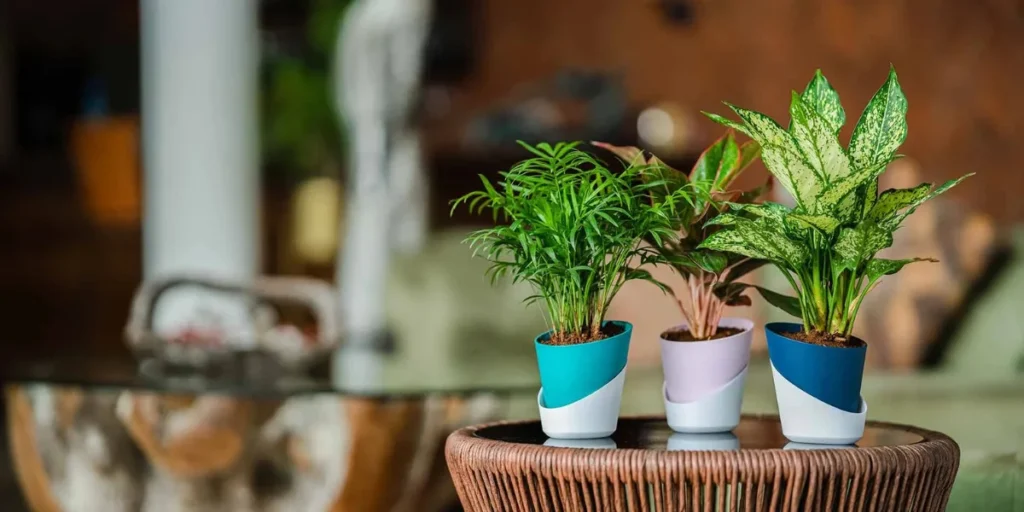
Choosing the correct container size is one of the most important steps when setting up a self watering system. If the pot is too small, the roots may become crowded. If it’s too large, the soil can stay overly wet and lead to root problems. Learning how to choose the right size self watering planter helps ensure healthy plant growth and proper moisture balance.
Unlike traditional pots, these containers also include a water reservoir, which means the planter size affects both root space and how long the plant can go between refills.
Start with the Current Pot Size
A good rule of thumb when selecting a new planter is to move up 1–2 inches in diameter from the plant’s current pot.
For example:
- A 4-inch plant pot → 5–6 inch self watering planter
- A 6-inch plant pot → 7–8 inch planter
- An 8-inch plant pot → 9–10 inch planter
This gives roots room to expand without surrounding them with too much unused soil.
When the container is dramatically larger than the root ball, the soil may hold more water than the plant can absorb.
Consider the Plant’s Growth Rate
Different plants grow at different speeds, and that should influence your planter size choice.
Fast-growing plants
Plants like pothos, philodendron, and monstera grow quickly and may benefit from slightly larger planters.
Slow-growing plants
Plants such as snake plants or ZZ plants prefer tighter containers and should not be placed in oversized pots.
Giving plants the right amount of space encourages steady growth while preventing unnecessary stress.
Think About Reservoir Capacity
Another factor unique to these containers is the water reservoir size. Larger planters usually include larger reservoirs, which means the plant can go longer between refills.
This can be especially helpful for:
- Busy plant owners
- Office plants
- Large tropical houseplants
However, very small plants placed in large reservoirs may sit in consistently wet soil for too long.
Understanding how these containers differ from traditional pots can also help when choosing sizes. Our comparison guide Self Watering Planters vs Regular Pots explains the main structural differences between the two.
Match the Planter to the Plant’s Root System
Some plants develop deep root systems, while others spread more horizontally.
Examples:
Deep-rooted plants
- Peace lilies
- Rubber plants
- Dracaena
These plants often perform better in slightly deeper containers.
Shallow-rooted plants
- Herbs
- Succulents
- Spider plants
These plants can thrive in wider but shallower planters.
Matching the planter shape to the root structure can help improve water absorption and root health.
Plan for Future Repotting
Even with the right container size, most houseplants will eventually outgrow their planters. Signs that a plant needs repotting include roots growing out of drainage holes, soil drying extremely quickly, or slow growth.
If you’re preparing to move a plant into a reservoir container for the first time, our guide on How to Repot a Plant Into a Self Watering Planter walks through the process step by step.
Repotting correctly ensures the wicking system works properly and the plant adapts smoothly to its new environment.
Final Thoughts
Learning how to choose the right size self watering planter helps maintain the balance between moisture retention and root health. Most plants do best when the new planter is just slightly larger than the current pot, allowing roots to expand without leaving too much unused soil.
By considering root size, plant growth rate, and reservoir capacity, you can select a container that keeps your plant healthy while reducing the need for frequent watering.
FAQ
Should self watering planters be bigger than regular pots?
Not significantly. Most plants only need a planter that is 1–2 inches larger than their current pot.
Can a self watering planter be too big?
Yes. Oversized containers can hold too much moisture, increasing the risk of root rot.
Do larger self watering planters mean less watering?
Usually yes. Larger planters typically include bigger reservoirs, allowing plants to go longer between refills.