
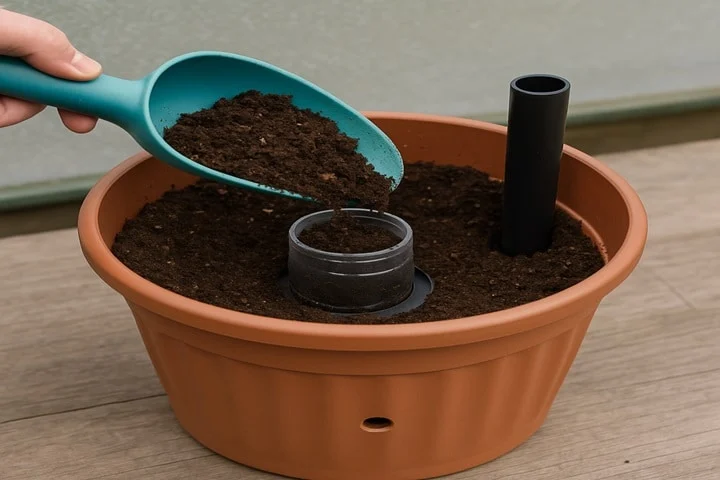
Short answer (featured snippet)
Yes — you can convert a normal pot into a self watering planter if you create:
✅ a water reservoir below the soil
✅ a wick system or soil column for moisture transfer
✅ an overflow hole to control water level
✅ proper soil structure that supports capillary action
DIY versions work well when set up correctly; however, poor design can lead to overwatering or weak moisture flow.
How Self Watering Planters Actually Work
Before building your own system, it helps to understand the basic principle behind self watering planters.
Unlike traditional pots, these containers separate water storage from the root zone. A reservoir sits below the soil, and moisture rises upward through capillary action. As roots use water, more moisture moves upward automatically.
Key components include:
- reservoir setup beneath soil
- wick or soil contact column
- airflow space to maintain root oxygen.
Can Any Normal Pot Be Converted?
Not every container is equally suited for conversion. Some designs work much better than others.
Pots that work best
- deeper containers with vertical space
- plastic or sealed interiors that retain water
- pots with room for a separate reservoir layer.
Pots that are more challenging
- shallow containers without space for water storage
- porous terracotta without a liner (water evaporates too quickly)
- extremely narrow pots where wick placement becomes difficult.
Therefore, choosing the right starting container makes DIY success much easier.
3 Simple Ways to Convert a Normal Pot
There isn’t only one DIY self watering planter setup. Below are three beginner-friendly methods depending on your materials and experience.
Method 1 — Wick System (Beginner Friendly)
This is the simplest homemade self watering planter approach.
Steps:
- Create a divider between soil and reservoir.
- Insert a wick through the divider.
- Ensure wick maintains soil contact and reaches water.
- Fill soil above and reservoir below.
Best for:
- indoor houseplants
- small to medium containers
- beginners experimenting with DIY systems.
👉 Are Self Watering Planters Good for Beginners?
Method 2 — Inner Pot + Outer Reservoir
Another easy conversion uses two containers.
How it works:
- place a nursery pot inside a decorative outer pot
- leave a water gap at the bottom
- allow soil or wick to access moisture below.
Benefits include easier maintenance and adjustable reservoir size. Additionally, this method avoids permanent modification of your main pot.
Method 3 — Bottle Reservoir DIY
If you want a quick experiment, a bottle reservoir can simulate a self watering system.
Basic idea:
- insert an inverted bottle or tube delivering water slowly
- maintain soil contact for capillary movement.
While this approach works for testing, long-term stability depends on proper airflow and water balance.
Why Overflow Holes Are Essential
Many DIY setups fail because they ignore overflow control.
An overflow hole:
- prevents flooding
- limits reservoir height
- protects root oxygen levels.
Without it, excess water may saturate soil completely, leading to root problems.
👉 Do Self Watering Planters Need Drainage Holes?
Best Soil for DIY Self Watering Planters
Soil plays a critical role in moisture movement.
Choose an airy mix that:
- supports capillary action
- drains excess water efficiently
- maintains structure over time.
Helpful ingredients include:
- perlite
- pumice
- coco coir
- coarse potting mix.
Avoid heavy, compact soils that trap too much moisture.
Common Mistakes When Converting Pots
Even simple DIY conversions can fail if certain details are overlooked.
Typical issues:
- dense soil blocking moisture movement
- no overflow hole
- wick not touching soil or water
- reservoir too deep, reducing oxygen exchange.
Because balance matters, small design choices significantly affect performance.
Signs Your DIY Conversion Is Working
After setup, watch for these positive signals.
- reservoir water decreases slowly over time
- soil moisture remains stable
- plant growth appears steady
- fewer watering adjustments needed.
Usually, the system needs a short adjustment period before stabilizing.
When DIY Self Watering Planters DON’T Work Well
Although many plants thrive in self watering setups, some struggle.
Examples include:
- succulents
- cacti
- plants preferring dry cycles.
These species require careful moisture control and may not benefit from constant reservoir hydration.
Indoor vs Outdoor DIY Self Watering Planters
Environmental factors influence how well your conversion works.
Indoor setups
- more predictable moisture levels
- lower evaporation rates
- easier monitoring.
Outdoor setups
- rain may overfill reservoirs
- heat increases evaporation
- wind accelerates drying.
Because outdoor conditions vary widely, overflow holes and proper reservoir depth become even more important.
FAQ
Can you convert terracotta pots?
Yes, but they often need a liner because porous clay absorbs water and disrupts reservoir stability.
Do you need special tools?
Usually not. Basic materials like plastic containers, wicks, or simple dividers are enough for most DIY builds.
Can DIY systems cause root rot?
Yes — especially if overflow control or airflow is missing. Proper moisture balance is essential.
Is a wick required?
Not always. Some systems use soil columns instead; however, a wick system makes moisture transfer more reliable for beginners.
Converting a normal pot into a self watering planter is a practical DIY project that combines simplicity with smart design. By focusing on reservoir setup, soil contact, and overflow protection, you can create a system that delivers steady hydration while reducing daily watering effort.